Glasses and contacts both correct your vision, so it’s easy to assume one prescription covers both. Lots of people do. Each lens sits in a different spot, though, and works with your eyes in its own way.
Contact and glasses prescriptions aren’t the same, and you can’t use one in place of the other. Your glasses are made from numbers that factor in where your frames sit on your face. Contacts need their own measurements, which come from a contact lens exam and fitting.
What Your Glasses Prescription Includes
Your glasses prescription tells the lab exactly how to shape the lenses for your frames. The numbers and abbreviations on it can look confusing at first, so here’s what each one does:
- Sphere (SPH): Corrects nearsightedness or farsightedness. A minus sign means you’re nearsighted, and a plus sign means you’re farsighted.
- Cylinder (CYL): Corrects astigmatism, which happens when your eye has an uneven curve.
- Axis: Shows the direction of your astigmatism as a number between 1 and 180.
- Add: Gives you extra magnifying power, usually in the lower part of the lens, for reading and other close-up work.
What Your Contact Lens Prescription Adds
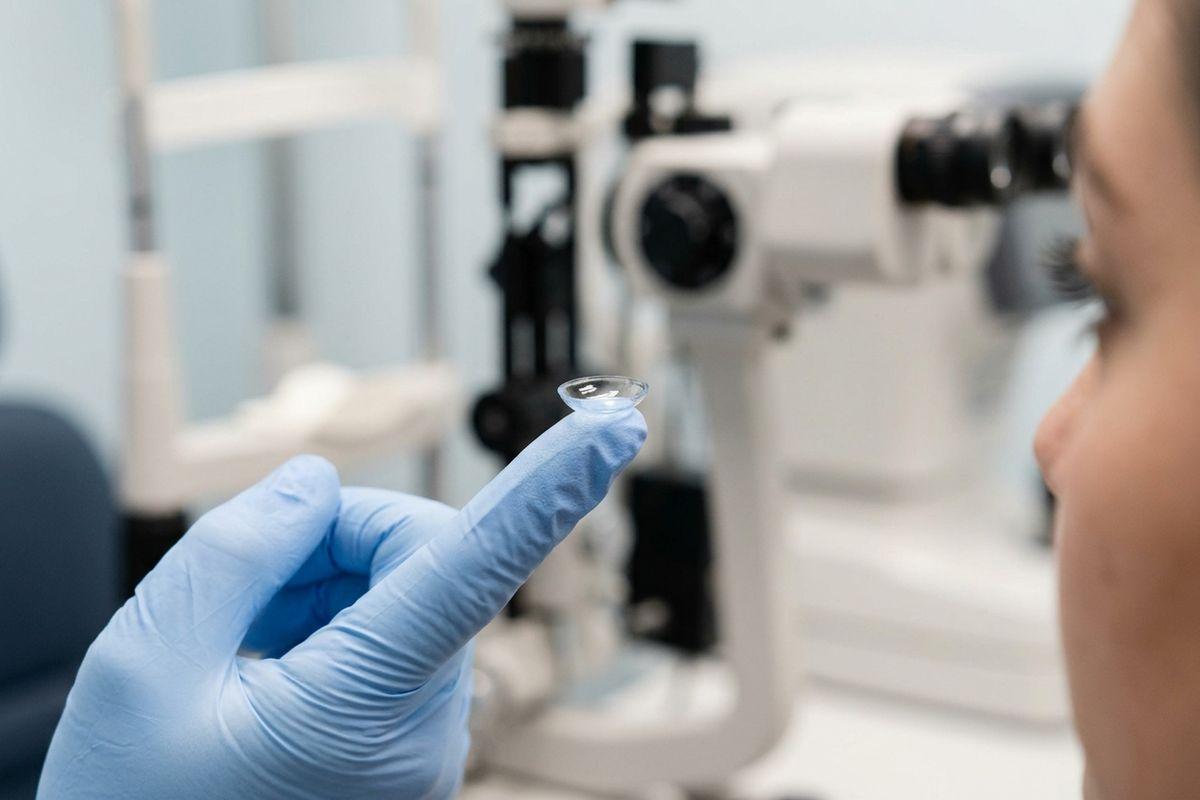
A contact lens prescription starts with your vision correction, then adds details a glasses prescription never needs. Because the lens sits directly on your eye, your prescription also needs a few extra measurements that glasses never do:
- Base curve (BC): Matches the curve of your cornea so the lens doesn’t fit too loosely or too tightly.
- Diameter (DIA): Measures how wide the lens is, which works with the base curve to decide how the lens sits on your eye.
- Brand and material: Names the exact lens you were fitted with, since each material lets a different amount of oxygen reach your eye.
Switching brands can change how a lens fits and feels. Check with your optometrist before you try a new one, even if the power stays the same.
Why Contact Lens Power Can Differ From Glasses
Your glasses sit about 12 millimeters in front of your eyes, while a contact lens rests right on the surface.
That small gap changes how much power you actually need. A lens sitting on your eye bends light differently than one hovering in a frame. So the numbers on your glasses prescription can differ from the numbers on your contact prescription, even though both fix the same eyes.
Why You Cannot Swap One Prescription for Another
Ordering contacts with your glasses numbers can leave you with lenses that don’t fit your eyes. A poorly fitted lens may slide around or rub every time you blink. Since the power was calculated for a different distance, you might also notice blurry vision or eye strain.
Fit also affects your eye health. Wearing contacts without a proper fitting can lead to eye injuries, infections, and other complications.
Who May Not Be a Good Fit for Contacts
Contacts work well for many people, but they aren’t right for everyone. A few conditions can make it harder, including:
- Sensitive eyes that get irritated easily
- Dry eye, especially when symptoms are severe
- Frequent eye infections
- Allergies to lens materials or cleaning solutions
- Young kids who aren’t ready to handle lens care on their own
These don’t always rule contacts out. Ask your optometrist about daily disposables or a different lens material, since some options may be easier on sensitive eyes.
What to Expect at a Contact Lens Fitting
Contacts usually require a longer first exam and more follow-up visits than glasses. Here’s how the process typically goes:
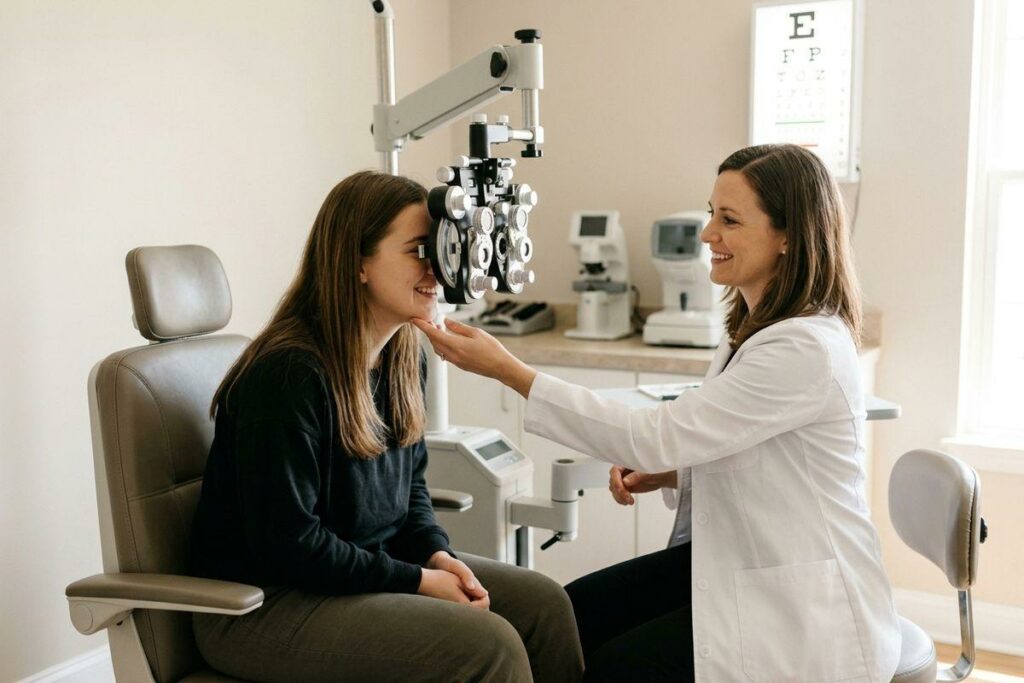
- Your optometrist checks your eye health and measures your cornea and tear film.
- You try on trial lenses so your optometrist can see how they sit and move on your eye.
- You wear the trial lenses for a few days as part of your regular routine.
- You come back for a follow-up, where your optometrist finalizes your prescription and answers your questions.
Mention anything you notice during the trial, even small things like dryness by the end of the day. Those details can help your optometrist choose a lens you’ll look forward to wearing.
Find Glasses and Contacts That Fit Your Eyes
At See & Co., our optometrists measure for glasses and contacts separately and fit each one around how you’ll wear it. If your first trial lenses don’t feel right, we’ll keep adjusting your fit at no additional cost.
Book your appointment and let’s find the lenses that suit your eyes and your routine.