
Nearsightedness affects billions of people worldwide, making it difficult to see things far away. If your prescription keeps climbing, you’re probably wondering if there’s a way to turn back the clock.
While myopia cannot be completely reversed once it develops, effective treatments can significantly slow its progression, especially in children. The key lies in understanding your options and working with your eye care team to find the right approach for your specific situation.
What Is Myopia and How Does It Affect Your Vision
Myopia, or nearsightedness, means your eye focuses light in front of your retina instead of directly on it. This makes distant objects appear blurry while close-up items stay clear. You might find yourself moving closer to read signs or struggling to see the board in meetings.
Common signs you might experience include:
- Difficulty seeing distant objects clearly
- Eye strain from squinting
- Headaches after visual tasks
- Blurred vision when driving or watching screens from a distance
Can You Actually Reverse Nearsightedness?
Myopia happens when your eyeball becomes too long from front to back, or the cornea becomes too curved. This physical change in your eye’s shape affects how light focuses inside your eye. Unfortunately, once the eye’s shape has changed in this way, it can’t be undone naturally.
Think of it like growing taller, since you can’t shrink back down to your previous height. Complete reversal isn’t an option right now, but you can focus on managing the condition to prevent further complications.
For kids whose eyes are still growing, treatment tends to focus on slowing myopia’s progression.
What “Slowing Progression” Really Means
When optometrists talk about myopia control, they’re focusing on preventing your child’s nearsightedness from getting worse. This means keeping their current prescription stable or slowing down how quickly it changes. While they’ll still need corrective lenses, their prescription shouldn’t continue climbing at the same rate.
Proven Methods to Control Myopia Progression
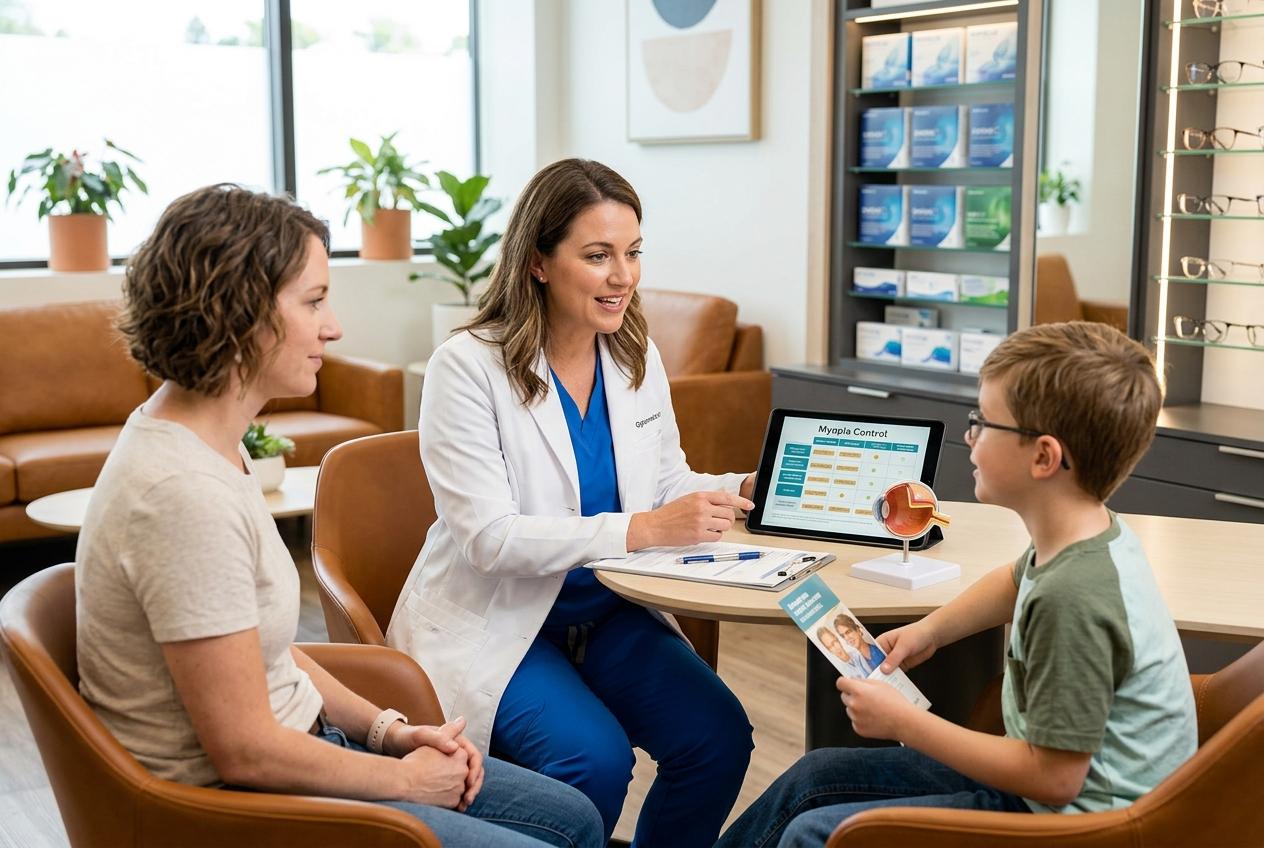
Several treatments have shown real success in slowing myopia progression. These approaches work differently but share the same goal: reducing how much children’s myopia worsens over time.
Specialized Contact Lenses
Orthokeratology lenses temporarily reshape your cornea overnight while you sleep, giving you clear vision during the day without glasses. Multifocal contact lenses work differently by changing how light enters your eye. Both types can slow myopia progression, particularly in children and teenagers.
Atropine Eye Drops
Low-dose atropine drops have shown impressive results in clinical studies. These prescription drops, used daily, can reduce myopia progression by up to 50% in some children. The treatment requires regular monitoring but offers a non-invasive option for myopia control.
However, they don’t correct blurry vision, so needs to be used in conjunction with a good pair of prescription lenses.
Lifestyle Changes That Help
Simple daily adjustments can easily support your child’s management plan. Build these habits into your routine:
- Increase outdoor time and natural light exposure
- Take regular breaks from close-up work
- Use proper lighting when reading or using devices
- Maintain appropriate reading distances
How Age Factors Into Myopia Control
Your age plays a significant role in how myopia develops and responds to treatment. Children typically respond better to myopia control because their eyes are still developing. Start treatment early, and you can make a substantial difference in preventing high myopia later in life.
In fact, the younger your child begins treatment, the more potential benefit they might see. Schedule regular pediatric eye exams to track these important developments.
Considerations For Adult Myopia
Adult myopia usually stabilizes by the mid-twenties, but it can still progress. While control treatments may be less dramatic in adults, options like proper lighting, regular breaks from screen time, and corrective lenses remain important for comfort and eye health.
Working with Your Eye Care Team
Managing myopia effectively requires professional guidance and regular monitoring. Visit your optometrist to track developments in your vision and adjust treatments for better results. Regular appointments include detailed measurements of your eye’s length and shape, which help determine if your current treatment is working effectively. Tracking these changes over time guides treatment decisions.
Your optometrist considers your age, lifestyle, and specific vision needs when recommending control options. What works well for one person might not suit another, making personalized care so important.
Take Proactive Steps For Your Child’s Future Vision
Don’t let a climbing prescription go unmanaged. Take immediate action to protect your child’s eye health and slow the progression of their nearsightedness.
Our knowledgeable team at See & Co takes the time to understand your unique needs and explain available control options. Book a comprehensive eye exam today and build a personalized plan to safeguard your family’s vision.